Ron and Dave understood that the PP81's weren't long for life when the hp demand went up. In 1959 they
decided to cast their own cases, make their own cylinder heads, and use through bolts to secure the works together. This necessitated removing the 81 cylinder head for the "billet head". These were shotgun design like
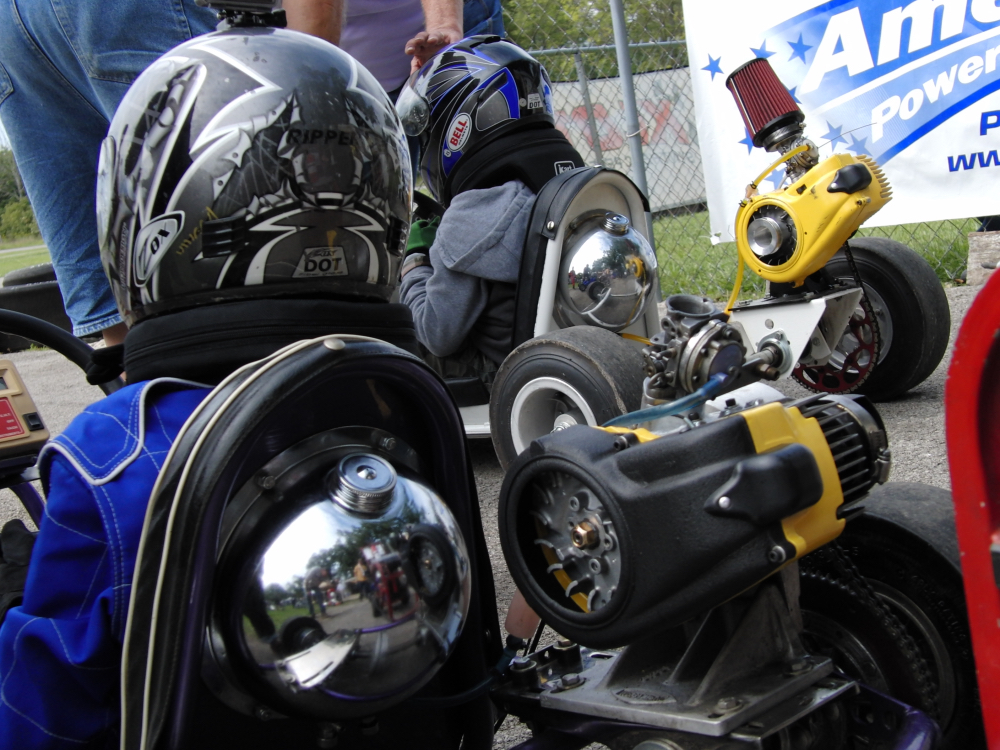
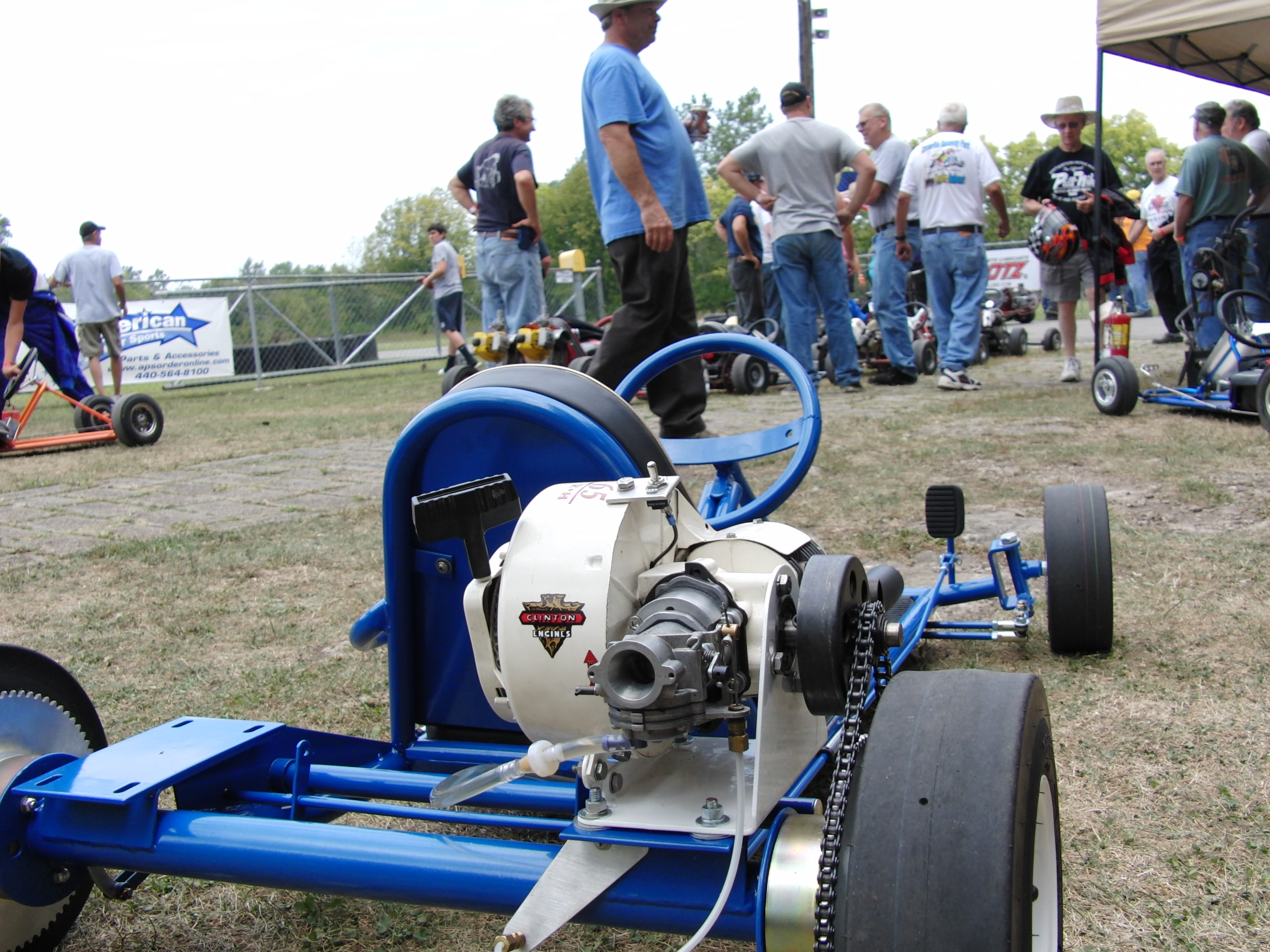
the PP's and WB's of the time, and were REAR legal fan cooled using a Clinton A490 shroud or something that looked very similar to one. The choice of the PP81 crank and rod assembly was a no-brainer. First,
they were readily available and second they already made a legal sized engine. Even with the poor oils available in 1959 rod failures were seldom.
This special crankcase worked so well that they decided to
replace the next weak link, the cylinder. Around this time they bought a Koenig outboard engine. Ron and Dave had the funds to buy an engine just to study how it was designed. The Koenig was a race engine by design and
the Germans were ahead of us in how to make horsepower. The Schnerle design came from Germany and Koenig's version was way ahead of Power Products design. Chain saws were designed to run at 5500-6500 rpms. The Clark
racing port shapes and timing allowed for more fuel inlet and the exhaust shape and angle gave the advantage of rpms. If there was a weak link it was the head design that did not have a squish band.
At this
time it was decided that the liner be chrome. This sounded good but was very hard to master. Many cylinders went to the recycle bin with bad chrome. I believe this was done locally in the Kansas City area. Another
aspect was that the "hard chrome" which is direct chrome to the aluminum cylinder was indeed very hard. Sunnen had no stones at the time that would easily cut the chrome. After the honing ordeal that took some
considerable time to get round a piston would be turned to fit.
The brothers invested in a dyno facility either purchasing one or making one. The pistons were fitted close, and as we are told, they would start and
load an engine, go home, and come back the next day and shut it off.
A second design evolved moving the cylinder to an angled upright position, maybe to get more air to the cylinders. In those days we all were
running gasoline. Many early racers came from powerboats and had the advantage of knowing something about additives, like NITRO and fuel bases like methanol. Everyone else just stumbled along. The first generation of
this engine was fan cooled. I have a casting of the ignition/shroud mount for the upright engine. They later decided the fan was not necessary, and a 5500 rpm fan generally would explode at 12,000 rpms.
The
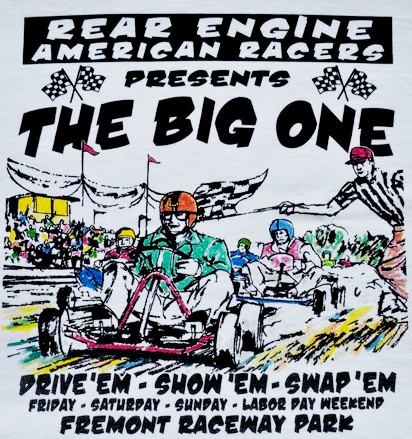
Clark Engine at the Fremont show is the last of any of the engines made. There were four total engines of this design and few spare parts. The displayed engine was made of all the available spare parts. It was built in
1960.
The last two engines Ron and Dave built were in 1961 and used built up cranks and one-piece rods. The rods may have been first in the Koenig.
Other interests came along and the WB 820 emerged and later the
Mc70 and Mc75 and the Clark became just a fond memory.